Course 1
Multi-omics, Demystified
The statistics behind every omics result, in the order you meet them: how the table is laid out, what to do about blanks, how to normalize, when the order of steps changes the answer, and how to test honestly across thousands of features. Each episode is short, uses simulated data so the truth is known, and pairs with an interactive guide where one exists.
 2:06
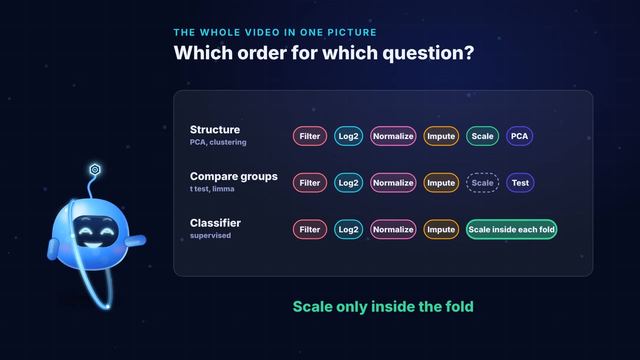
Which order?
Before any test, one question decides your pipeline: what are you trying to find out? This two-minute playbook shows the order of steps for three common goals.
Premieres soonEpisode 1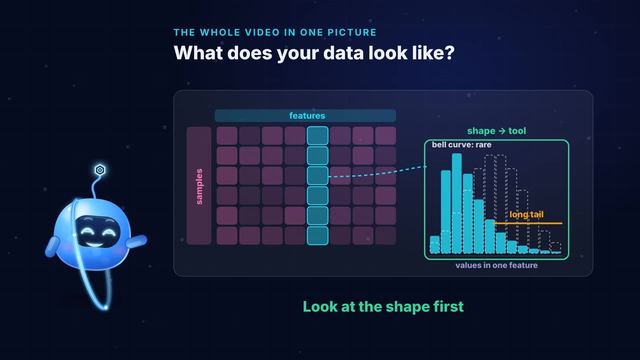 2:10
Data layout and distributions
What does your data look like? One table for the whole study: rows are samples, columns are features.
Premieres soonEpisode 2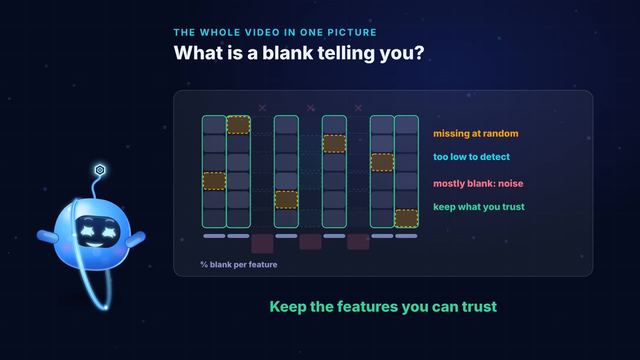 2:45
Missing values and filtering
What is a blank telling you? Some blanks are random, and some happen because the value was too low to detect.
Premieres soonEpisode 3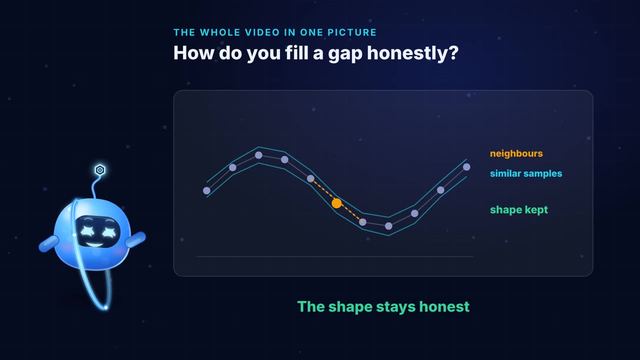 3:06
Imputation
How do you fill a gap honestly? Filling a gap is guessing, so do it carefully.
Premieres soonEpisode 4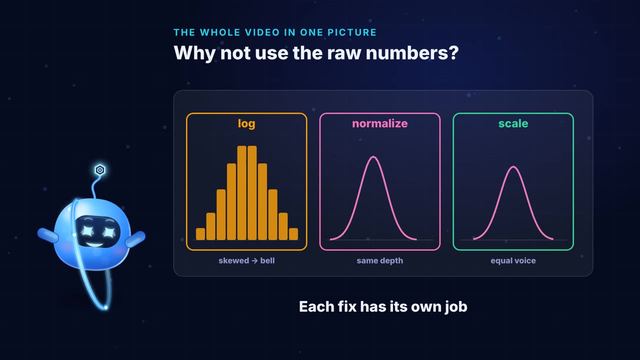 3:40
Log, normalization and scaling
Why not use the raw numbers? Three problems, three fixes, and each fix has its own job: a log transform for huge and tiny values, normalization for samples measured more deeply, and scaling for big features that shout.
Premieres soonEpisode 4B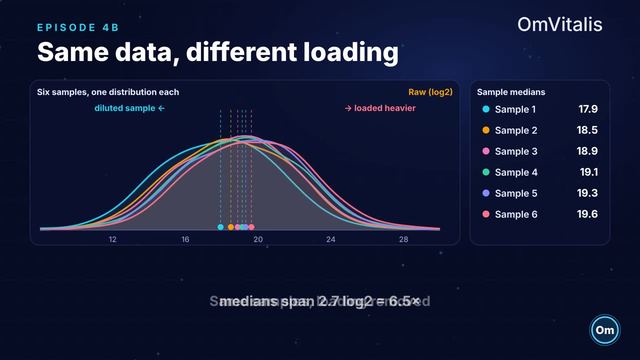 8:30
Normalization methods explained
Same samples, different loading.
Premieres soonInteractive guideEpisode 5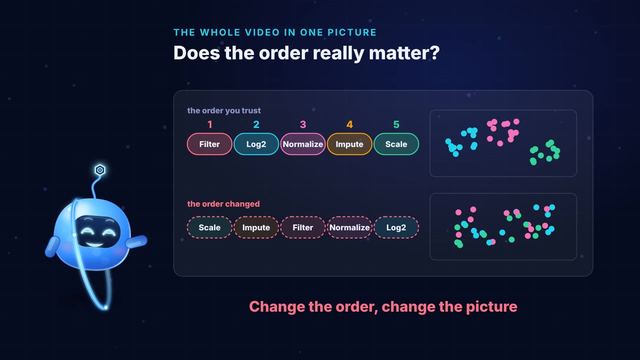 5:29
Order of operations
Does the order really matter? Yes.
Premieres soonEpisode 6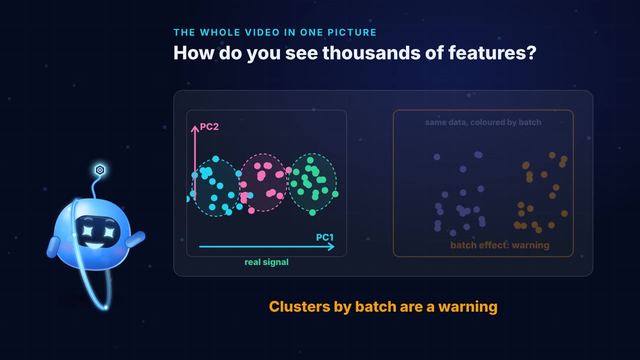 5:54
PCA
How do you see thousands of features at once? PCA finds the directions that carry the most variation.
Premieres soonGuideEpisode 7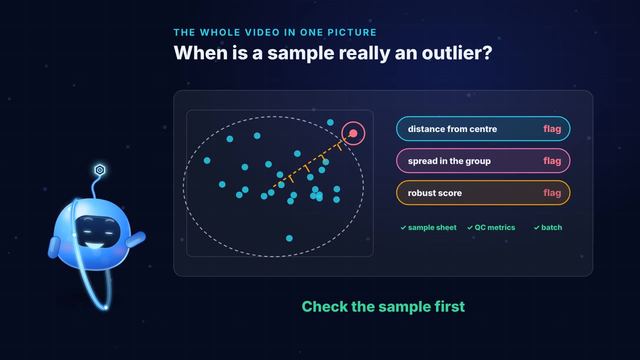 6:20
Outlier tests
When is a sample really an outlier? Two levels, two tests: one value in one feature, or one whole sample across many.
Premieres soonGuideEpisode 8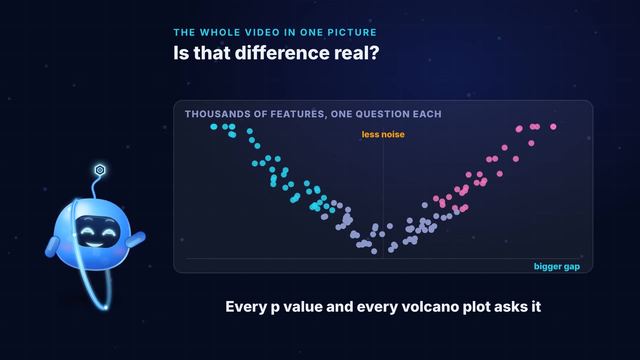 5:09
Differential analysis: two groups
Is that difference real? Every p value and every volcano plot asks the same question: is the signal bigger than the noise? This episode builds the two-group comparison from the ground up.
Premieres soonGuideEpisode 9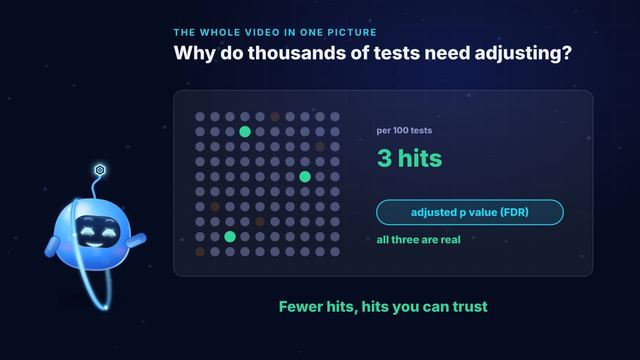 5:32
Multiple testing, limma and DESeq2
Why do thousands of tests need adjusting? Test enough features and some will look significant by chance.
Premieres soonGuideEpisode 10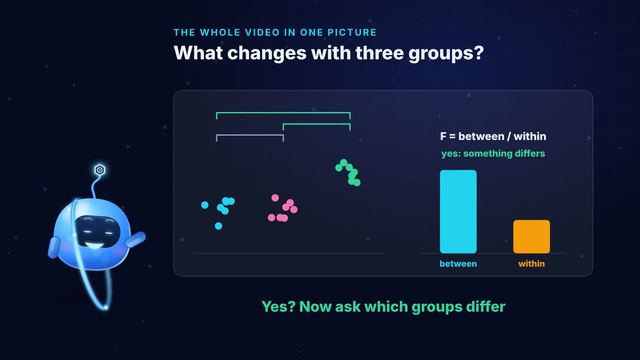 5:05
Three or more groups
What changes with three groups? First ask whether anything differs, then ask which groups differ.
Premieres soonGuideEpisode 11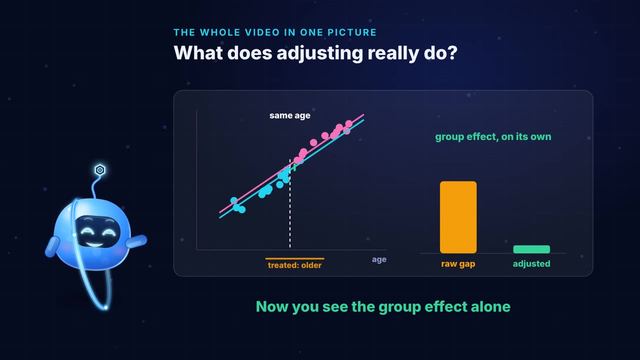 8:56
Covariates, models and adjusting
What does adjusting really do? When groups differ in age, sex or batch, a raw gap mixes several effects.
Premieres soonInteractive guide